Tree Removal Near Property Lines With Safe Planning
Tree removal near property lines can protect your home, yard, and peace with nearby neighbors. However, work close to a boundary needs more care than removing a tree in an open space. Clear property limits, safe planning, and good communication can prevent damage and confusion.
At Junior’s Tree Services, we believe every project should begin with a clear plan. Boundary trees may affect two yards, so we look at access, nearby structures, and the safest way to complete the work while respecting each neighbor property.
Know Your Property Boundaries Before Tree Work Begins
Before planning tree removal near property lines, confirm where your land ends. A deed, property survey, fence line, or marked boundary may help. If the location is unclear, a licensed surveyor can mark the area before any cutting begins.
Clear boundaries can show whether a trunk stands on one lot or crosses the line. Useful first steps include:
- Review your property survey or deed.
- Check visible pins, stakes, or fences.
- Discuss the marked boundary with your neighbor.
- Use a surveyor when records are unclear.
Local Rules Can Shape Your Tree Removal Plan
Local rules may affect tree removal near property lines, especially when branches, roots, or trunks cross into another yard. Some cities may require permits, while protected trees can have extra limits. Therefore, checking local requirements before work starts can help avoid delays.
Rules can also differ on trimming branches across a boundary. Because every situation is different, homeowners should avoid assuming a tree can be removed without permission. When ownership is uncertain, legal advice or a survey may be useful.
Good Neighbor Communication Prevents Many Boundary Tree Problems
Talking early can make tree removal near property lines much easier. Explain concerns such as dead limbs, leaning growth, root damage, or limited access. Then listen to your neighbor before choosing the next step.
Our team at Junior’s Tree Services encourages clear agreements before crews enter shared spaces. If access through another yard is needed, written permission can prevent confusion. You can also discuss cleanup, timing, and whether both households want to review the plan.
Check Tree Health Before Choosing a Full Removal
A tree may look healthy while hiding decay, weak branches, or damaged roots. For that reason, a careful inspection is important before full removal. Tree removal safety in Irving, TX starts with knowing what could fall, split, or shift during the job.
Watch for warning signs such as:
- Large dead or hanging branches.
- Deep cracks or trunk cavities.
- Fungus or decay near the base.
- Strong leaning toward nearby structures.
An experienced professional can explain whether trimming, monitoring, or removal makes sense.
Professional Crews Make Boundary Tree Removal Much Safer
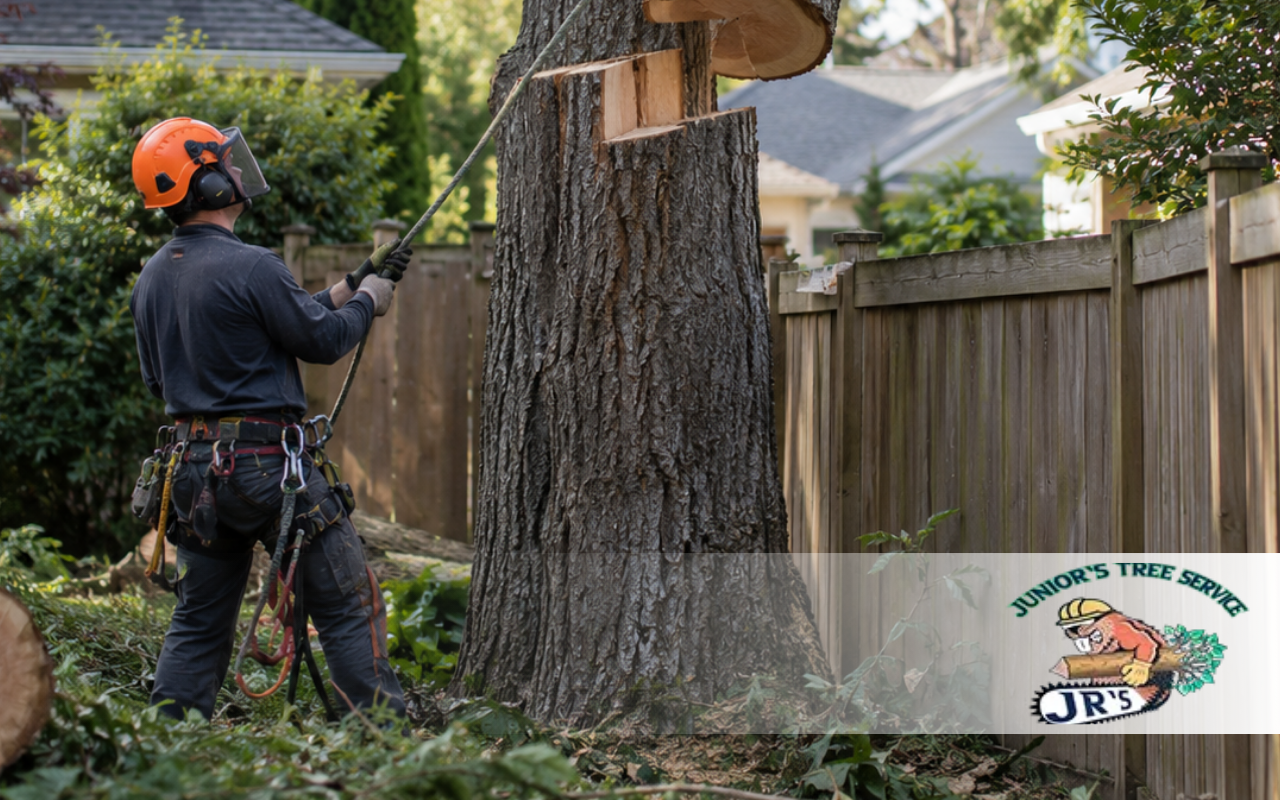
Professional equipment and controlled cutting are important around fences, roofs, vehicles, and utility lines. At Junior’s Tree Services, we plan access and lowering methods carefully so heavy limbs do not swing into a neighbor property.
When comparing companies for tree removal near property lines in Irving, TX, ask about insurance, cleanup, experience, and work methods. Our guide on choosing a reliable tree removal company explains useful questions.
- Confirm liability and worker coverage.
- Ask how nearby structures stay protected.
- Review the cleanup plan.
- Define access areas before work begins.
Plan Cleanup and Replanting With Both Yards Considered
After removal, branches, wood, sawdust, and stump material can affect both sides of a boundary. Plan where debris will move and which driveway or gate crews will use. This helps keep shared areas clear.
Replanting can also prevent future problems. Choose smaller trees or shrubs with enough space for mature roots and branches. For local service details, review our Lewisville tree removal service information before planning your project.
Frequently Asked Questions
Who owns a tree growing on the boundary?
Ownership can depend on where the trunk grows and local law. A survey can help confirm the location before work begins.
Can I cut branches over my property?
Rules vary by location. Limited trimming may be allowed if it does not harm the tree, so check local rules first.
Should I tell my neighbor before removal?
Yes. Early notice can prevent misunderstandings, especially when crews need nearby access or branches extend over the line.
What makes boundary tree work more dangerous?
Fences, homes, power lines, and narrow access can make controlled cutting more important. Professional tree removal safety reduces avoidable risk.
When should I call a tree professional?
Call when a tree leans, has dead limbs, shows decay, or threatens nearby structures. An inspection can guide the safest option.
Protect Neighbor Relationships After the Tree Work Ends
Good communication should continue after the work is finished. Check both yards, remove leftover debris, and confirm that fences or shared areas are in good condition. These steps show respect and help close the project positively.
At Junior’s Tree Services, we want homeowners in Irving, TX to feel informed before work begins. If a boundary tree is creating concern, contact us to discuss your property and the safest next step.