Stump Grinding After Tree Removal For Healthy Outdoor Areas
Stump grinding after tree removal is the next step when a tree is gone, but its base remains. A leftover stump can affect your yard’s look, use of space, and create a tripping risk.
At Junior’s Tree Services, we help homeowners finish the job with a cleaner and safer outdoor area. Stump removal can prepare your yard for grass, plants, paths, or other improvements.
Old Tree Stumps Create Problems Around Yards
An old stump may seem harmless, but it can slowly become a problem. Decaying wood can attract insects, hold moisture, and make lawn care harder. A leftover stump in Lewisville, TX can also become difficult to see when grass or weeds grow around it.
Removing the stump also supports yard safety. If you want to better understand your options, our guide on ways to remove a tree stump explains practical approaches for clearing unwanted stump material.
Useful Tools Make Stump Grinding Safer And Easier
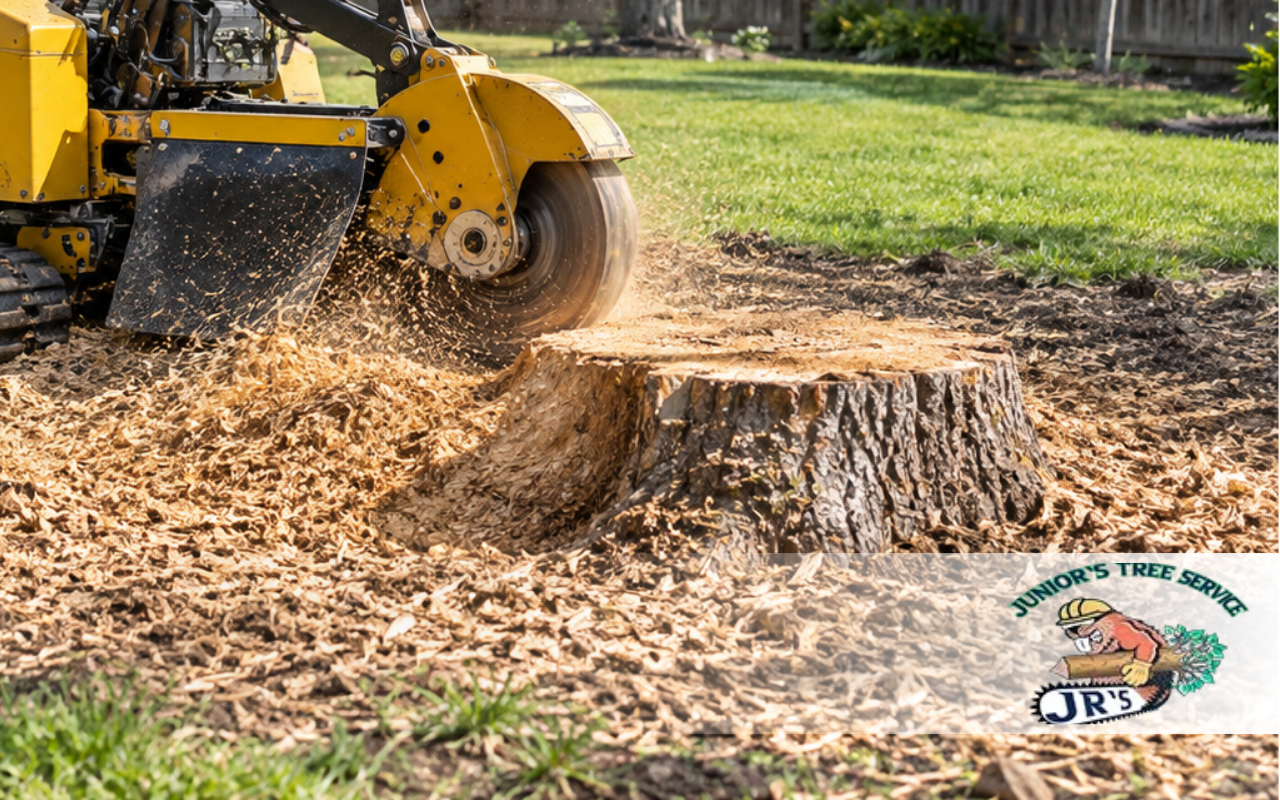
Good equipment makes stump grinding after tree removal more controlled. A stump grinder cuts the wood into small chips while working below the soil line. Safety gear and simple hand tools are also important before the machine starts.
- Safety glasses protect your eyes from flying wood chips.
- Strong gloves help protect your hands while clearing debris.
- Hearing protection reduces exposure to loud machine noise.
- A shovel helps clear soil and loose material around the stump.
Careful Preparation Protects People, Property, and Underground Lines
Before grinding begins, the work area should be checked carefully. Rocks, metal, branches, and other objects can interfere with the cutting wheel. Underground utility lines must also be identified before work starts near the soil.
Our team at Junior’s Tree Services also recommends keeping children, pets, and visitors away from the work zone. A clear space gives the operator room to move safely and limits flying debris.
A Simple Grinding Process Clears The Stump Efficiently
Stump grinding after tree removal works best when the machine is positioned correctly. The cutting wheel moves across the stump in steady passes. Each pass removes a small layer until the wood is reduced below the surrounding ground level.
- Clear soil, stones, and loose debris from the stump area.
- Position the grinder so the cutting wheel reaches the outer edge.
- Move the wheel slowly from side to side across the wood.
- Continue lowering until enough stump material has been removed.
- Clear the chips and fill the remaining space with suitable soil.
Homeowners dealing with a difficult stump can also review our local stump grinding service for more information about professional help in Lewisville.
Large Stumps Often Need Extra Care And Planning
Large or dense stumps can take more time because thick roots and hard wood increase the amount of material to remove. Nearby fences, patios, pipes, and foundations can also limit how freely equipment can move around the area.
For difficult jobs, professional stump removal may be the safer choice. At Junior’s Tree Services, we can assess the space before work begins and choose a practical approach that protects nearby features while helping restore usable ground.
Wood Chips Can Support Better Yard Care Afterwards
Stump grinding after tree removal often leaves a useful pile of wood chips. Instead of treating all of this material as waste, some chips can be reused around the yard. This can reduce cleanup and reuse organic material.
- Use clean chips as mulch around suitable garden areas.
- Add small amounts to compost with fresh green materials.
- Employ chips on simple garden paths where appropriate.
After the hole is filled, level the soil and watch for settling. Grass seed or sod can then help the repaired area blend naturally with the rest of your lawn.
Frequently Asked Questions
How deep should a stump usually be ground?
The needed depth depends on your plans for the area. Grinding several inches below the soil can be enough for many lawn repairs, while new construction or planting may require more clearance.
Can a stump grow back after grinding?
Some tree species may send up new shoots from remaining roots. Monitoring the area and removing new growth early can help keep the space clear.
Is stump grinding safer than digging roots out?
Grinding usually causes less ground disturbance because it focuses mainly on the stump. Digging can require more soil removal and may affect nearby landscaping.
Can wood chips stay in the stump hole?
Some chips may be mixed with soil, but too much woody material can settle over time. Using suitable topsoil helps create a more stable surface.
When should homeowners call a professional service?
Professional help is useful for large stumps, tight spaces, multiple stumps, or areas near structures and utilities where careful equipment use matters most.
Professional Grinding Helps Restore A Cleaner Outdoor Space
Stump grinding after tree removal completes the work that begins when a tree comes down. It removes a common yard obstacle, improves yard safety, and creates room for new landscaping or a smoother lawn.
When you want help with a stubborn leftover stump, our team at Junior’s Tree Services can guide you through the next step. You can contact us to discuss the safest approach for your property.