
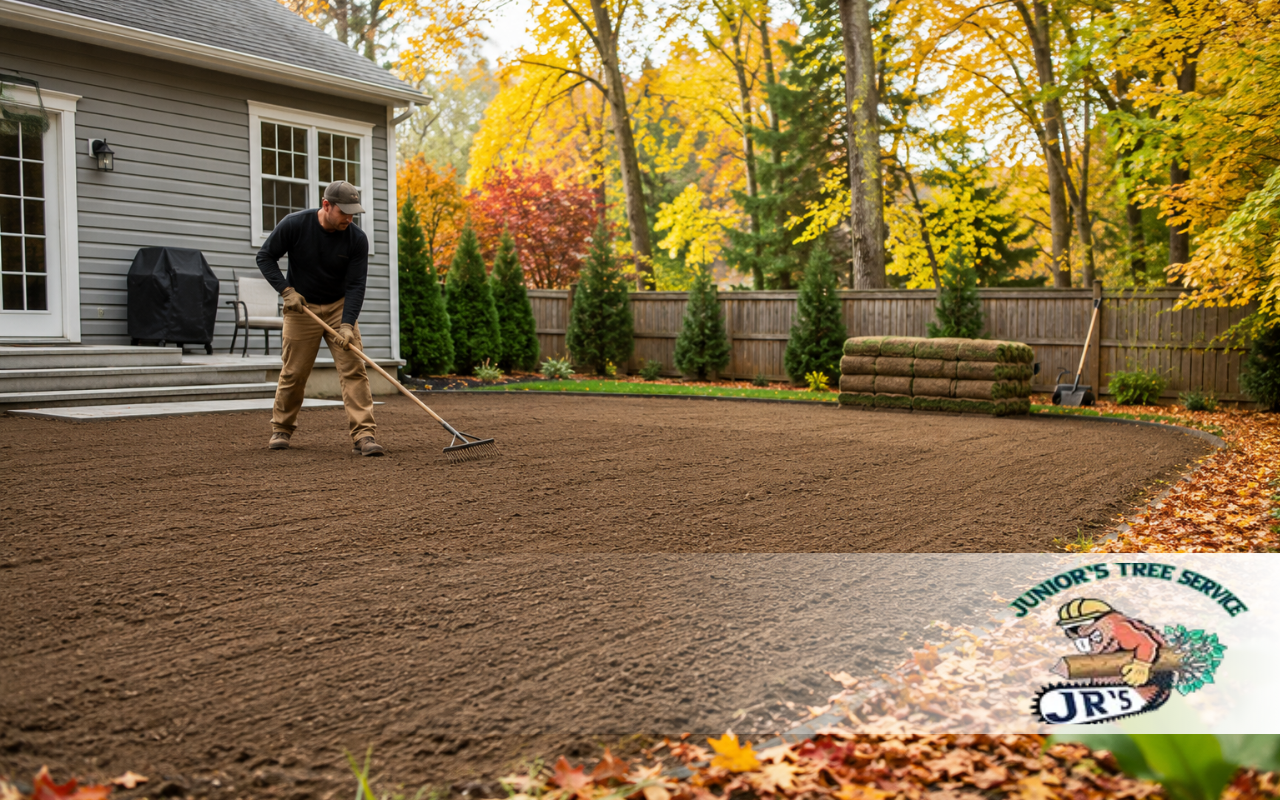
Simple Fall Sod Installation Prep for Healthier Lawns
Fall sod installation prep gives your yard a strong start before cooler weather arrives. With the right steps, you can create a smooth base, support deep roots, and reduce common problems such as dry spots, puddles, and uneven growth.
At Junior’s Tree Services, we keep the process clear for homeowners who want reliable results. Good planning now can make sod installation easier and help your new lawn stay green, firm, and healthy through the changing season.
Start With a Clear Lawn Condition Check
Before ordering materials, check the weather and plan enough time to finish without rushing. A calm schedule keeps exposed soil from drying out and helps every task stay organized. Careful fall sod installation prep also gives you time to solve small issues before they affect the finished lawn.
Begin by walking across the full yard and looking for thin grass, hard soil, weeds, and low areas. This first review helps you understand what needs attention before the new sod arrives.
Next, measure the lawn and note how much sun each area receives. Good lawn preparation also includes watching where rainwater collects, because wet spots may need extra work before you continue.
Build a Better Base Through Soil Prep
Strong roots need loose, even ground. Break compacted soil with a garden fork or tiller, then rake the surface until large clumps are gone. This step improves air flow and helps water move through the soil.
- Remove rocks, sticks, and old roots.
- Add compost where the soil feels weak.
- Rake the surface until it feels level.
Our team at Junior’s Tree Services uses simple soil prep methods that support better root contact. For more guidance, review our step-by-step sod installation guide.
Correct Drainage Before New Sod Goes Down
Water should move away from the home and never sit under fresh grass. After rain, mark any puddles or soft areas so you can fix them before laying sod.
Small drainage changes often make a big difference during fall sod installation prep. You may need to raise low areas, shape a gentle slope, or loosen heavy soil so water can move more freely.
- Fill shallow dips with clean topsoil.
- Guide water away from the foundation.
- Recheck the yard after watering.
Remove Old Growth and Level the Ground
Cut the existing grass low, then remove old turf, weeds, and loose debris. A sod cutter can speed up large jobs, while a flat shovel works well for smaller yards.
Once the area is clear, rake the soil again and fill any holes. Lawn preparation should leave the ground smooth, firm, and slightly below nearby sidewalks so the finished sod sits at the right height.
Choose Sod That Fits Your Yard Conditions
Select grass based on sunlight, shade, soil type, and local weather. The right choice can reduce future stress and help the lawn stay strong after sod installation.
Measure the full square footage and add a small extra amount for cuts around curves and borders. Our article on the value of expert sod work explains how careful planning can improve the final result.
Gather Essential Tools for a Smooth Installation
Having everything ready saves time and protects the sod from drying out. Keep the rolls shaded until use, and begin work soon after delivery.
- Rake, shovel, and sharp utility knife
- Garden hose and sprinkler
- Lawn roller and measuring tape
- Gloves and knee protection
With Junior’s Tree Services, we help homeowners organize each part of fall sod installation prep without making the process feel difficult. Simple tools and a steady order of work can prevent avoidable delays.
Frequently Asked Questions
When should fall sod work begin?
Start when daytime heat has eased but the soil is still warm. This timing supports root growth before colder weather slows the lawn.
How deep should I loosen the soil?
Loosen the top few inches so roots can spread easily. Avoid leaving the ground too soft, because sod needs a stable base.
Should I fertilize before laying new sod?
A starter fertilizer may help, but the right choice depends on your soil. A simple soil test can guide that decision.
How soon should fresh sod be watered?
Water each section shortly after placement. The soil should stay moist, but it should not remain soaked or muddy.
Can I walk on new sod?
Limit foot traffic until the roots begin to hold. Heavy use too early can shift pieces and create uneven areas.
Finish With Consistent Watering and Early Care
After laying the first row along a straight edge, press each piece tightly beside the next. Stagger the seams, trim corners carefully, and roll the surface to improve contact with the soil.
Water quickly and keep the lawn evenly moist during the first weeks. Avoid heavy traffic and wait to mow until the grass is tall enough. For support with fall sod installation prep, get in touch with our lawn service team for clear next steps.