How to Safely Remove a Tree: A Comprehensive 2025 Guide
Removing a tree from your property might seem simple at first. However, it involves far more than grabbing a chainsaw. As trees age, they may become safety hazards that threaten structures, power lines, or even personal safety. Whether your goal is to remove a diseased tree, clear landscaping space, or reduce storm risks, understanding how to safely remove a tree is essential.
This comprehensive 2025 guide blends modern safety updates with practical, step-by-step advice. It helps you handle the process confidently—whether as a DIY project or with help from professionals. For expert help, you can explore tree removal page for more details.
Assessing the Tree and Preparation
Before starting, evaluate the tree’s health and surroundings. A careful inspection ensures that you understand potential hazards and plan safely.
- Evaluate the Tree’s Condition: Look for decay, fungi, pests, hollow areas, or leaning. If uncertain, seek an arborist’s opinion.
- Check Local Regulations and Permits: Many areas, including Lewisville and DFW, require permits for removal. These protect the environment and prevent fines.
- Gather the Right Tools: Use a chainsaw, safety gear, ropes, and ladders. Having the right equipment minimizes risks and ensures efficiency.
Always review your local permit rules before beginning. If you need assistance, contact the services page for guidance on compliance and safe removal practices.
Planning the Removal Process
A successful tree removal requires strategic planning and careful execution. Therefore, take your time to review the space and plan accordingly.
- Determine the Fall Direction: Choose a safe direction for the tree to fall and clear nearby objects.
- Mark Escape Routes: Plan two exit paths at 45° angles for quick retreats.
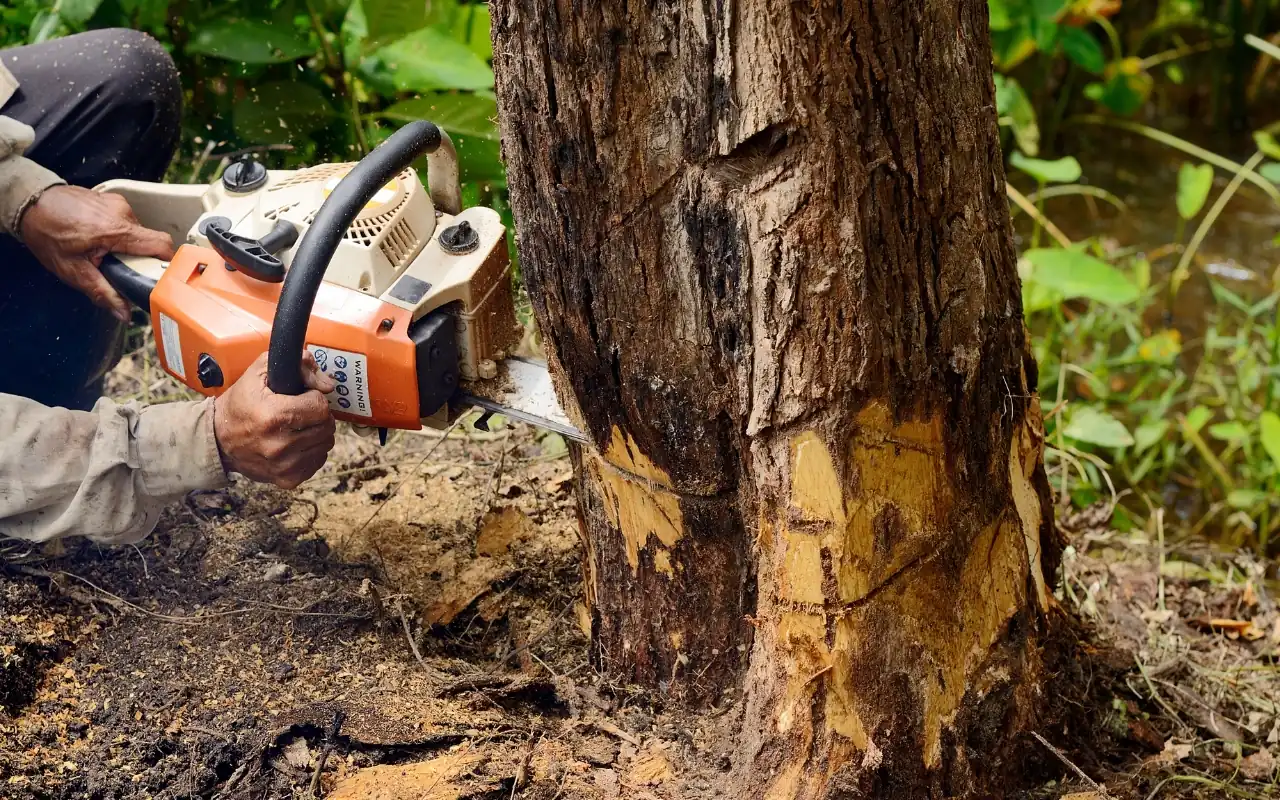
- Cut the Notch: Make a notch on the side facing the fall direction, around one-quarter of the trunk’s diameter.
- Make the Felling Cut: Cut from the opposite side slightly above the notch base until the tree starts to lean.
- Control the Fall with Ropes: Use ropes for large trees to control the fall and ensure precision.
Stay alert for hazards such as power lines, fences, or nearby buildings. Keeping the area clear helps avoid accidents when learning how to safely remove a tree.
DIY Tree Removal: Steps and Precautions
If you plan to remove a tree yourself, preparation and caution are crucial. Follow these steps for safety and efficiency.
- Clear a 2×2 meter safe zone before cutting begins.
- Set clear escape routes and assign roles to all helpers.
- Trim lower branches to reduce weight.
- Perform notch and felling cuts as described earlier.
- Cut the trunk into sections for easy disposal.
Never cut above shoulder height or force your chainsaw. If the tree is near structures or power lines, it’s best to hire professionals. Visit the contact page to request expert help and ensure your project’s safety.
Post-Removal Steps
Once the tree is down, continue with careful cleanup and restoration. These steps keep your property safe and ready for new growth.
Stump Removal
You can grind the stump using rental equipment or hire a professional. Grinding below ground level prevents regrowth and allows replanting. Understanding how to safely remove a tree includes finishing the job properly by addressing the stump.
Clean Up and Disposal
Gather branches, sawdust, and debris immediately. You can recycle them as mulch or firewood. Local programs often accept tree waste for free. Keeping your site clean improves safety and aesthetics.
Safety Gear and Best Practices
Personal safety gear is non-negotiable. Always check your equipment before starting, and replace worn or damaged items promptly.
- Hard hat and eye protection
- Hearing protection and gloves
- Leg chaps and steel-toe boots
Proper gear prevents injuries and ensures control when operating chainsaws. By maintaining awareness and discipline, you enhance safety and efficiency while learning how to safely remove a tree step by step.
Hiring Professional Tree Removal Services
When working on complex projects, hiring experts is the wisest option. Certified arborists handle challenges efficiently and safely. Before hiring:
- Check licenses, insurance, and certifications.
- Request detailed written estimates.
- Verify who manages permits and debris disposal.
Professional crews not only ensure safety but also protect your property. Learn more through the tree removal page for expert support and responsible solutions.
Environmental and Post-Removal Considerations
Tree removal affects ecosystems and soil balance. Therefore, check for wildlife habitats before starting. Reuse organic material whenever possible, and plant native replacements to restore canopy health.
After stump removal, enrich the soil with compost and topsoil. Choose new plantings suitable for your region’s conditions. By doing so, you create a healthy, resilient landscape.
Frequently Asked Questions
What are the first steps before removing a tree?
Start by assessing the tree’s condition and checking for local removal permits. Planning ahead ensures safety and compliance.
Can I remove a tree close to my house?
Yes, but proceed carefully. If the tree leans toward your home, hire professionals to prevent property damage.
How can I tell if a tree needs removal?
Look for cracks, hollow trunks, dead limbs, or signs of disease. A certified arborist can confirm the tree’s stability.
Is it necessary to remove the stump?
Removing or grinding the stump prevents regrowth and improves your yard’s appearance. It also avoids pest attraction.
When should I hire professionals instead of doing it myself?
If the tree is large, near power lines, or unstable, hire a professional service for safety and proper execution.
Ensuring Safe and Effective Tree Removal
Safe tree removal combines planning, regulation compliance, and protective gear. By following these 2025 guidelines, you can handle the process responsibly and confidently. Always evaluate conditions, prepare properly, and use correct techniques when learning how to safely remove a tree.
When unsure, consult professionals to avoid hazards. For reliable help, visit the contact page and connect with certified experts today. Removing a tree properly not only protects your property but also enhances your landscape’s health and appearance.