
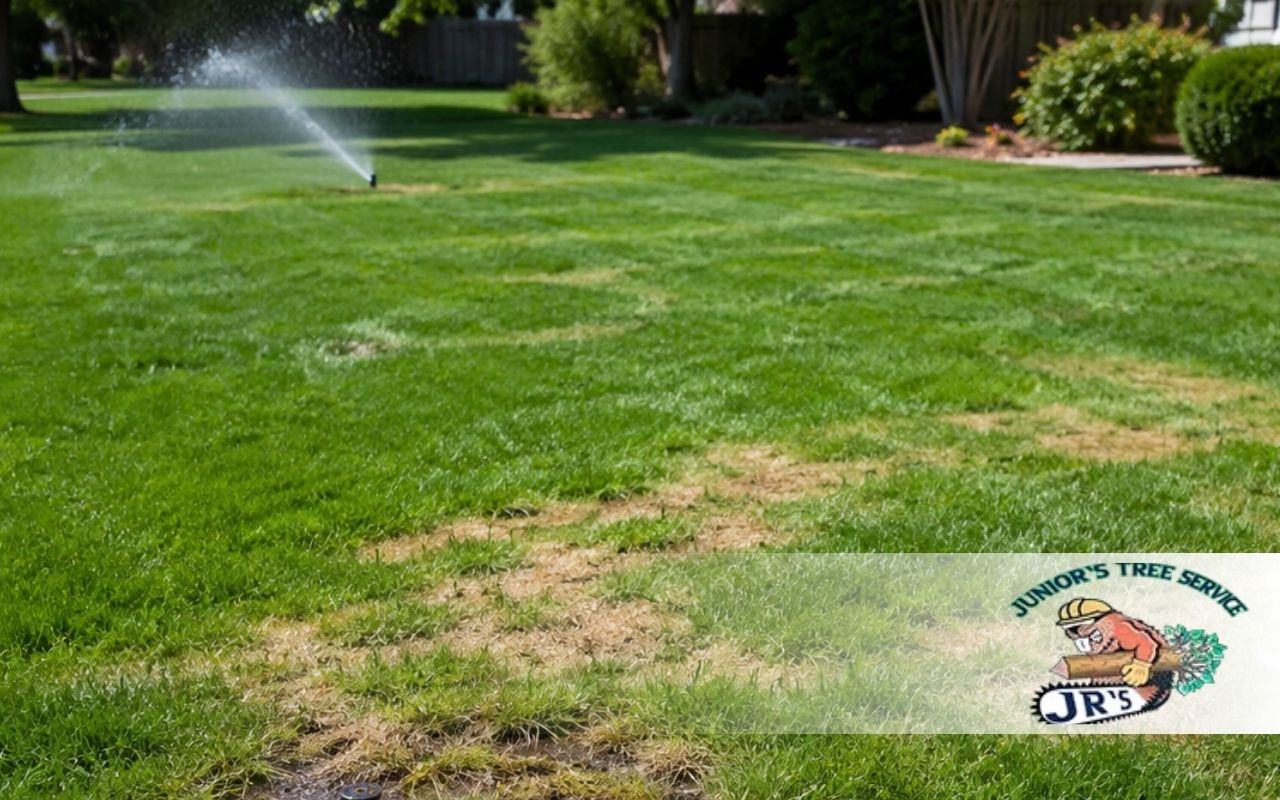
Fixing Irrigation Leaks Causing Lawn Dry Spots Easily
Irrigation leaks causing lawn dry spots can make your yard look stressed, even when you water often. These hidden leaks may lower water flow, weaken sprinkler coverage, and leave some areas brown while others stay too wet.
At Junior’s Tree Services, we help homeowners notice early warning signs and choose clear next steps. With simple checks, timely repairs, and steady care, your lawn can look greener, healthier, and more even.
Early Lawn Clues That Point To Hidden Leaks
Wet or soggy patches after watering often mean water is escaping underground. In addition, small puddles near sprinkler heads can show sprinkler leaks that keep the soil too damp in one area.
Dry brown areas beside wet spots are also common signs. When water escapes before reaching the full zone, low pressure can cause uneven watering and weak lawn growth.
- Soft soil that sinks when you step on it
- Muddy spots around sprinkler heads or valve boxes
- Brown grass that does not improve after watering
- Water running onto sidewalks or driveways
Simple Tools That Make Leak Checks Easier
A few basic tools can make the search less stressful. For example, a small shovel helps you check soil near heads, while a pressure gauge can show drops linked to irrigation leaks causing lawn dry spots.
A moisture meter can also help compare dry and wet areas. Meanwhile, gloves, towels, and flags keep the work cleaner and help mark spots that need a closer look.
A Clear Process For Finding Problem Areas
Start by running each sprinkler zone one at a time. Then, walk slowly across the lawn and watch how water reaches each section. This step makes weak spray patterns easier to see.
Next, turn off the system and check heads, valves, and visible connections. Our team at Junior’s Tree Services recommends marking soft soil, odd puddles, or weak spray before digging carefully.
- Run one zone and watch the spray pattern closely.
- Look for soggy soil, dry grass, or hissing sounds.
- Check sprinkler heads for cracks, clogs, or loose seals.
- Dig gently only where signs clearly point to trouble.
Small Repairs Homeowners Can Often Handle Safely
Some small fixes are simple when the damage is easy to reach. First, turn off the water supply. Then, clean the area around the leak so you can see the cracked part clearly.
Loose sprinkler heads may only need cleaning, new seals, or careful tightening. However, if irrigation leaks causing lawn dry spots return after testing, the issue may be deeper than it first looked.
When Professional Repair Becomes The Smarter Choice
Large leaks, buried main lines, and repeated pressure loss usually need trained help. Professional tools can find hidden breaks faster, with less digging and less damage to the lawn.
With Junior’s Tree Services, you get clear guidance before the work begins. We explain the likely problem, repair options, and how the system should perform after the fix.
For more help with system problems, visit our sprinkler repair service information to see how repairs can protect your lawn.
Maintenance Habits That Help Prevent Future Leaks
Routine care helps stop small issues before they become expensive repairs. Also, regular checks protect water pressure and reduce the chance of irrigation leaks causing lawn dry spots during hot months.
Seasonal care matters too. Before cold weather, outdoor lines should be protected from freeze damage. You can review our winter sprinkler preparation tips for helpful guidance.
- Flush sprinkler zones at the start of the season.
- Replace cracked heads, worn seals, and brittle pipes.
- Keep water pressure within a safe range.
- Check valve boxes for mud, leaks, or standing water.
Frequently Asked Questions
Why do dry spots appear when sprinklers run?
Dry spots can appear when leaks reduce water flow before it reaches the full zone. Clogged heads, broken pipes, or poor spray direction can also cause uneven watering.
Can low pressure make my lawn look patchy?
Yes, low pressure can stop sprinkler heads from spraying far enough. As a result, some grass receives enough water while nearby areas stay dry and weak.
Are sprinkler leaks always easy to see?
No, some sprinkler leaks stay hidden underground. However, soggy soil, puddles, sinking ground, or higher water bills can point to a leak below the surface.
How soon should I repair a small leak?
You should repair a small leak as soon as you notice it. Quick action helps prevent soil washout, wasted water, and more irrigation leaks causing lawn dry spots.
Should I call for help with repeated dry patches?
Yes, repeated dry patches often mean the system needs a full check. For direct support, contact us through our contact our sprinkler repair team page.
Healthy Grass Starts With Balanced Water Coverage
After repairs, run each zone and watch the spray from start to finish. Then, check for drips, weak heads, wet spots, and areas that still look dry after watering.
At Junior’s Tree Services, our goal is to help your yard receive steady water without waste. When irrigation leaks causing lawn dry spots are fixed early, your grass has a better chance to stay green, full, and healthy.