
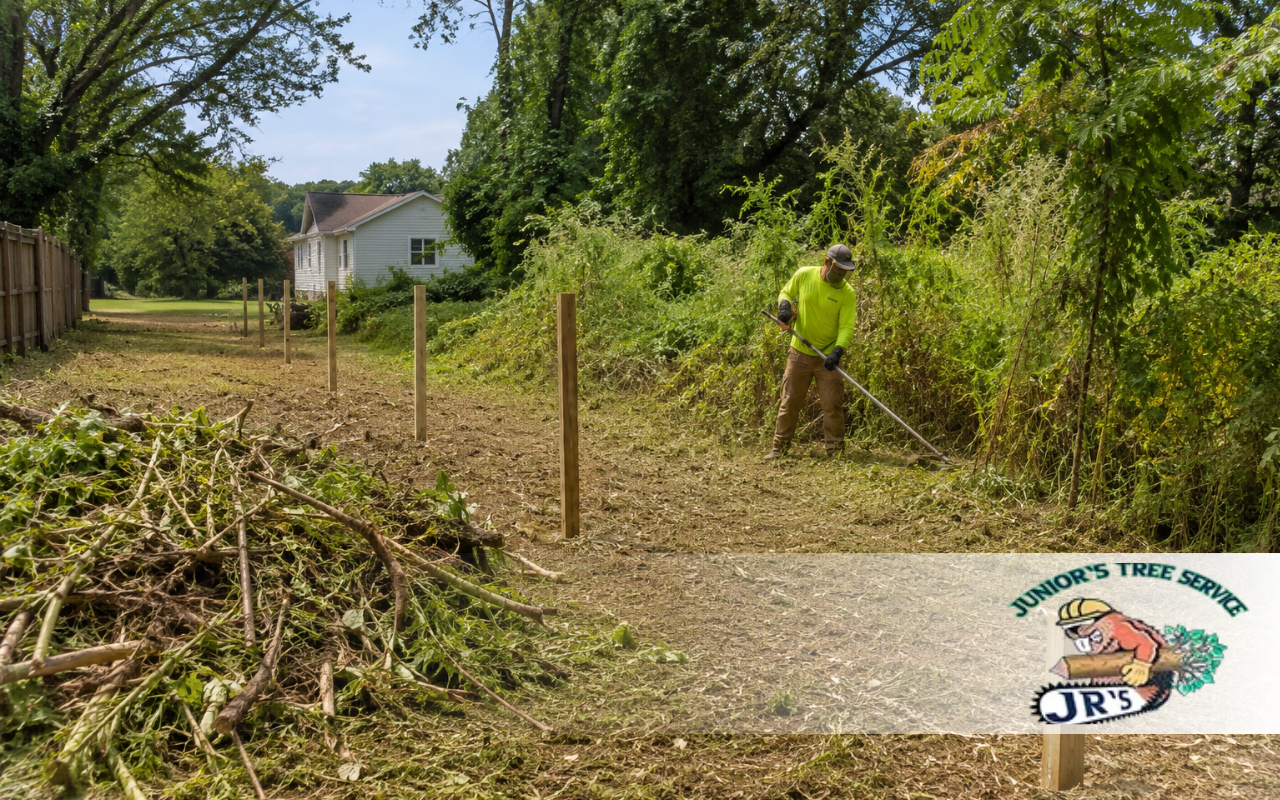
Fence Success Starts With Lot Clearing Before Fence Installation
Lot clearing before fence installation creates a safe, open space for strong posts and straight panels. By removing brush, rocks, roots, and old materials first, we reduce delays and help the fence sit on firm ground.
At Junior’s Tree Services, we prepare each area with care so the fence crew can work with fewer problems. A clean lot also supports better drainage, safer access, and a finished boundary that looks neat for years. In addition, clear ground helps everyone see the property line and plan each stage with confidence.
Why Proper Land Clearing Supports A Stronger Fence
Lot clearing before fence installation gives every post a better place to stand. Uneven soil, thick roots, and hidden waste can cause posts to lean, shift, or settle after the work is complete.
Proper preparation also creates a safer work zone. Our team at Junior’s Tree Services removes common hazards, opens access paths, and helps reduce damage to tools. For more planning details, review our guide to planning a cleared lot.
Overgrown Plants Can Hide Serious Ground Problems Below
Dense grass, vines, and shrubs often cover holes, low spots, roots, and loose soil. Before brush removal begins, we walk the area and mark places that may need more careful work.
- Thorny vines near the property edge
- Small trees growing along the fence path
- Wet ground hidden under thick weeds
- Roots that may block post placement
This first check helps us choose the right tools and avoid missed areas. It also makes the next clearing steps faster, safer, and easier to manage. As a result, the fence team can begin with a clear view of the site.
Hidden Rocks And Debris Require Careful Early Attention
Rocks, concrete pieces, metal scraps, and old fence parts can slow the project. They may damage digging tools or create weak spots where posts need stable soil.
During lot clearing before fence installation, we mark and remove these items before digging starts. With Junior’s Tree Services, customers get a cleaner work area and fewer surprises once the fence crew arrives.
- Separate wood, metal, and concrete
- Mark large rocks before machine work
- Remove sharp or unsafe materials first
- Keep useful access routes open
Useful Tools Make Every Clearing Task Faster And Safer
Small areas may only need rakes, shovels, pruning shears, and hand saws. Larger areas often require brush cutters, chainsaws, skid steers, or compact digging equipment.
We match the tool to the task instead of using heavy equipment everywhere. This protects nearby plants, limits soil damage, and keeps the fence path clear without disturbing more land than needed.
Fence Line Clearing Keeps Posts Straight And Even
Fence line clearing focuses on the exact path where posts and panels will go. We use stakes and string to define the route, then remove plants, roots, and loose material from both sides.
- Mark the planned fence path
- Clear growth near each post point
- Remove roots and surface debris
- Rake and check the line again
Lot clearing before fence installation works best when this path stays open and easy to inspect. A clean line helps prevent crooked sections, uneven gaps, and delays during post setting.
Responsible Debris Hauling Leaves Your Entire Property Clean
Debris hauling is the final step after cutting and clearing. We gather branches, old wood, rocks, and mixed waste into organized groups so each material can be handled correctly.
For simple cleanup ideas, visit our brush disposal and cleanup guide. Our crew also keeps work areas tidy, which makes the property safer and easier to use after clearing.
Frequently Asked Questions
How early should clearing begin before fence work?
Clearing should begin before materials and crews arrive. Early preparation gives time to remove hidden problems, smooth rough ground, and confirm the fence path without rushing.
Does every fence project need full lot clearing?
No. Some properties only need a narrow path cleared. However, lot clearing before fence installation is useful when brush, roots, debris, or uneven ground may affect the work.
Can brush grow back after the area is cleared?
Yes. Some roots and seeds may return. Proper brush removal, follow-up trimming, and regular checks help keep the fence line open and easier to maintain.
What happens to branches and old materials?
We sort them by type before debris hauling. Green waste, wood, metal, and concrete may require different disposal methods based on local rules and site needs.
How wide should the cleared fence path be?
The needed width depends on the fence style, tools, and access space. We usually clear enough room for safe digging, straight alignment, and easy movement around each post.
Start With Clean Ground For Better Fence Results
Lot clearing before fence installation protects the quality of the entire project. A level, open, and debris-free area helps crews work safely while giving posts a stronger and more even base.
At Junior’s Tree Services, we make preparation clear and practical from the first visit. To discuss your property and next steps, reach out our team.