Simple Overgrown Lot Clearing Checklist for Property Owners
Clearing a wild property can feel difficult, but a clear plan makes each step easier. Our overgrown lot clearing checklist helps you organize the work, spot risks, and move through the property without losing focus.
At Junior’s Tree Services, we believe good preparation makes clearing safer and more useful. With simple steps, you can turn thick weeds, brush, and scattered waste into a cleaner space for future use.
Start With a Careful Review of Property Conditions
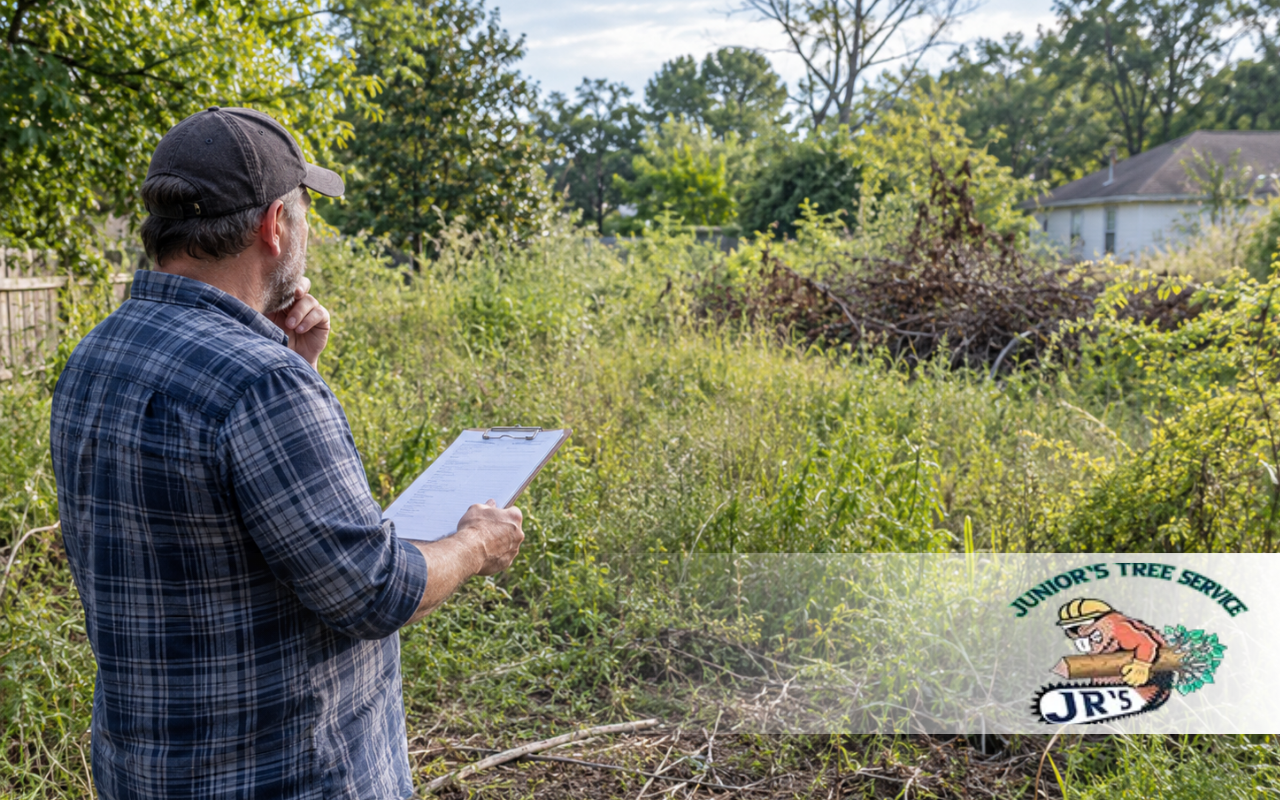
Before cutting, walk around the lot and study the condition of the land. Look for tall grass, vines, shrubs, fallen branches, hidden holes, uneven ground, and places where water collects.
Mark property lines, trees you want to keep, and areas near utility lines. Our overgrown lot clearing checklist should begin with this review because it helps you choose safe work zones and decide where professional support may be needed.
Gather the Right Tools for Safe Brush Clearing
The right tools make brush clearing faster and reduce unnecessary strain. Check every tool before work begins, and never use damaged equipment.
- Wear gloves, work boots, eye protection, and long pants.
- Use pruning tools for small branches and thick vines.
- Choose a trimmer or brush cutter for dense grass.
- Keep a rake and cart nearby for easy hauling.
For larger clearing jobs, our team at Junior’s Tree Services can help you choose a safer approach without taking on equipment that may be difficult to control.
Create a Practical Clearing Plan for Separate Sections
Divide the lot into smaller areas before you begin. Start with sections that block access, create safety concerns, or need attention. This makes progress easier to track.
Add each zone to your overgrown lot clearing checklist and note the main task for that section. Allow extra time for hidden debris, heavy roots, or thick growth that may slow the work.
- Cut tall grass and light weeds first.
- Trim shrubs, vines, and smaller branches next.
- Handle stumps, large limbs, and heavy waste last.
Work Methodically While Protecting People and Nearby Property
Begin at an easy access point and move in one direction. Clear walking paths early so tools and cut material do not create trip hazards. Stop if weather or site conditions become unsafe.
Watch for snakes, insects, unstable branches, and hidden objects under thick growth. Never cut near power lines or attempt dangerous tree work without trained help. Following the overgrown lot clearing checklist in order reduces rushed decisions and keeps the project easier to control.
Handle Large Trees Stumps and Heavy Growth Safely
Large trees, thick limbs, and stubborn stumps can turn a simple lot cleanup into a risky job. Trees near buildings, fences, roads, or utility lines should be checked carefully before any cutting begins.
When customers contact Junior’s Tree Services, we can explain when professional lot clearing support in Lewisville may be the better choice. For more planning ideas, review our practical lot clearing tips for property owners.
Sort Debris Carefully and Finish the Cleanup Responsibly
Good debris removal keeps the area organized and makes final cleanup easier. Separate leaves and grass from larger branches, wood, old fencing, metal, and other waste. Check local disposal rules before hauling waste.
- Compost clean leaves and small plant material when possible.
- Chip suitable branches for mulch or future landscaping.
- Keep metal, wire, and treated wood in separate piles.
- Arrange proper hauling when waste volume is too large.
Responsible disposal is an important part of any overgrown lot clearing checklist because a cleared property should not leave unsafe piles or unwanted waste behind.
Frequently Asked Questions
How should I begin clearing an overgrown lot?
Start with a full walk-through. Mark hazards, property lines, access points, and areas with the heaviest growth before choosing tools or starting brush clearing.
When does lot clearing need professional help?
Professional help is wise when large trees, power lines, steep ground, heavy machinery, or unsafe conditions make the work difficult to manage safely.
What should happen to cleared branches and weeds?
Sort organic material from other debris. Compost, chip, recycle, or use approved local disposal services based on the type and amount of waste.
How can I prevent heavy regrowth later?
Mow or trim the area often, remove new weeds early, and use mulch or suitable ground cover where needed to limit fast regrowth.
Can I clear the entire property at once?
Working by sections keeps tools, waste, and safety tasks organized while giving you better control over the project.
Maintain Your Cleared Lot for Better Lasting Results
After lot cleanup, cover bare soil where needed and watch for erosion or fast weed growth. Regular mowing, trimming, and small cleanup sessions can prevent the property from becoming difficult to manage again.
With Junior’s Tree Services, you can also get clear guidance when the next stage feels too large to handle alone. Use our consultation page for lot clearing assistance to discuss the condition of your property and the safest next step.