
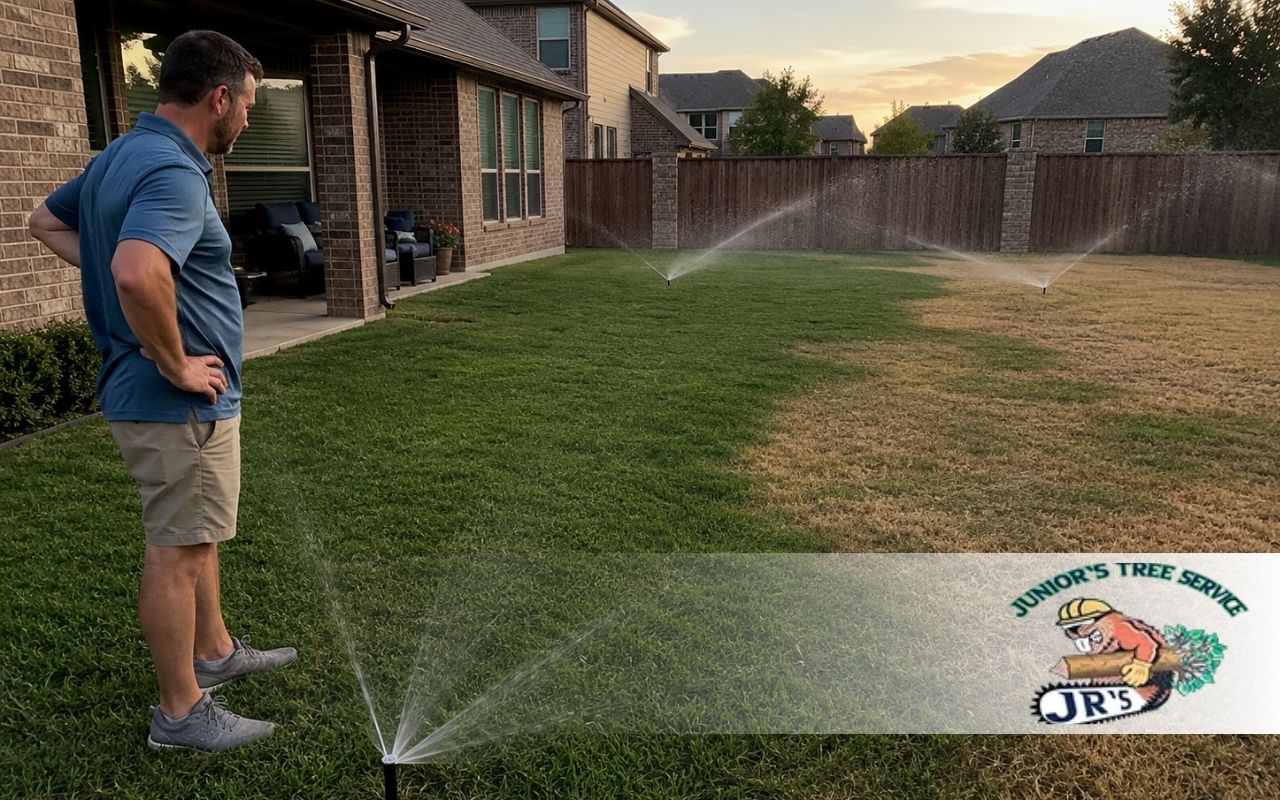
Fixing Sprinkler Zones Not Covering Lawn Problems Properly
Sprinkler zones not covering lawn areas can leave dry patches across a yard that should look full and green. When water misses key spots, the grass weakens, soil dries out, and plants around the lawn may also suffer.
At Junior’s Tree Services, we help homeowners look at the simple causes first. Often, the issue comes from tilted sprinkler heads, weak pressure, poor irrigation coverage, or a schedule that does not match the lawn’s real needs.
Small Alignment Issues Can Create Large Dry Patches
Sprinkler heads can move after mowing, foot traffic, or normal soil shifting. Even a small lean can send water toward sidewalks, driveways, or fences instead of the grass that needs it most.
Start by checking each head while the zone runs. Then, straighten heads that spray in the wrong direction, clear dirt from nozzles, and replace cracked parts. This simple step can reduce dry patches quickly.
Simple Tests Reveal Weak Irrigation Coverage Areas
A basic catch test can show where water is landing and where it is missing. Place small cans across the lawn, run one zone, and compare the water levels after the cycle ends.
- Mark areas where cans collect very little water.
- Adjust sprinkler heads that spray too short or too far.
- Change nozzles when the spray pattern does not fit the space.
This test helps confirm sprinkler zones not covering lawn sections before bigger changes are made. For more help with system problems, visit our sprinkler repair service page.
Smart Controls Support More Balanced Watering Habits
Older timers often water every zone the same way, even when the yard has different needs. A smart controller can adjust watering based on weather, heat, rain, and soil moisture.
With Junior’s Tree Services, our team can explain when a controller upgrade makes sense. Smart tools can reduce waste, protect plants, and help fix sprinkler zones not covering lawn areas by giving each zone better control.
Better Timing Helps Soil Absorb Water Evenly
Watering early in the morning gives soil more time to absorb moisture before heat rises. This can lower water loss and help reduce dry patches caused by fast drying.
- Run shorter cycles instead of one long watering session.
- Give clay soil more time to absorb water slowly.
- Water sandy soil more often because it drains faster.
Seasonal care also matters. To protect your system during colder months, read our guide about sprinkler winter care steps.
Water Pressure Problems Can Limit Spray Distance
Weak water pressure can stop sprinkler heads from reaching the full lawn area. High pressure can also cause misting, which wastes water before it reaches the grass.
- Check for weak streams from several sprinkler heads.
- Look for mist that drifts away in the wind.
- Ask a professional to test pressure when the issue continues.
Proper pressure supports better irrigation coverage and helps solve sprinkler zones not covering lawn problems without guessing. It also helps each head spray the distance it was made to reach.
Targeted Drip Lines Solve Hard To Reach Spots
Some lawn edges, shaded corners, or areas near beds may not work well with regular spray heads. Drip lines or soaker hoses can bring water closer to the roots without overspray.
This option works well near trees, fences, and narrow planting areas. It can also support better irrigation coverage where compacted soil or slopes make normal watering less effective.
Frequently Asked Questions
Why do some lawn areas stay dry?
Dry areas often happen when sprinkler heads are blocked, tilted, clogged, or spaced poorly. Low pressure and short watering times can also cause uneven moisture.
How can I test sprinkler coverage at home?
Place small cans around the lawn and run one zone. After watering, compare the levels to see which areas receive less water.
Can bad pressure damage lawn watering results?
Yes. Low pressure can shorten spray distance, while high pressure can create mist. Both problems can leave grass without steady moisture.
Should every sprinkler zone run the same time?
No. Each zone may need a different schedule based on sun, shade, soil type, slope, and sprinkler head layout.
When should I call for sprinkler help?
Call when basic adjustments do not fix dry patches, weak flow, or uneven spray. Hidden leaks or blocked lines may need expert care.
Healthy Lawns Begin With Clear Sprinkler Decisions
Solving sprinkler zones not covering lawn issues starts with careful checks, simple tests, and the right watering plan. When each zone works as it should, the lawn can grow thicker and healthier.
When customers contact Junior’s Tree Services, we listen first and explain the safest next step. For help with dry patches, sprinkler heads, or system concerns, use our contact page for lawn watering help.